AI Chatbot: Vamos Marcar
Designing with AI in 2020, before the hype arrived
- Conversational UI
- Chatbot
- NLP
- Research
- Branding
- Client
- Unicamp
- Year
- 2020
- Discipline
- Design & Product
- Role
- Product Designer & Researcher
What I did
- Needfinding and a survey of amateur sports players to validate the problem before choosing a solution
- Scoping call: a general purpose event assistant rather than a sports specific app
- Conversation design: welcome, intent routing, entity collection and fallback flows
- An intent and entity model of 7 intents with training phrases and 5 entities, written like user stories
- NLP model built and refined in IBM Watson Assistant, wired into BLiP conversation flows
- A working prototype shipped on Telegram, Messenger and the web, then tested with real users
- Brand identity: icon, wordmark, colour palette and shareable event invite images
Vamos Marcar? was my final project for a postgraduate certificate in Graphic Design at Unicamp: a chatbot that creates and manages small events through plain conversation, in WhatsApp, Telegram or Messenger, with no app to install.
It was built in 2020, before generative AI turned every product into a chat window. The interesting part is that the constraints of the time made the design work harder. There was no model that could simply understand a sentence. Every intent, every entity and every recovery path had to be written by hand, which is exactly what made it a design project rather than a technology one.
The problem
The observation came from an amateur women’s football team. Scheduling a single training session meant someone copying and pasting an attendance list into a WhatsApp group, chasing confirmations one by one, and re-posting the details for whoever had missed them. Players did not confirm, information got buried, and the organiser carried the whole thing manually.
Apps exist for this. The research explained why they were not being used. A survey of 38 people practising amateur sport found:
- Around 90% used WhatsApp as their main channel for organising and inviting.
- 76.3% reported some difficulty planning events in their group.
- Half of those who had tried a dedicated app did not want to use one again.
The barrier was not the feature set. It was the install. Every participant has to download the app for any of it to work, so the weakest link in the group decides whether the tool gets adopted at all. Anything that lives outside the conversation the group already has starts at a disadvantage.
What I did
I followed a Double Diamond process, starting from observation rather than from a chosen technology, so the answer had to earn its place.
The conversation was the platform. Instead of asking people to move to a new place, the product moved to where they already were. A chatbot in a messaging thread has no install step, no onboarding and no empty state. The organiser talks to it, and the guests receive an invitation in the same app they were going to be messaged in anyway.
Broad over niche. There were two paths: a sports specific product with extra features like member and cost management, or a general event assistant with a narrower feature set. I chose the general one. The specific version had more to offer but a smaller audience and a harder adoption problem, while the general one covered the observed case and every adjacent one: dinners, barbecues, birthdays, meetings.
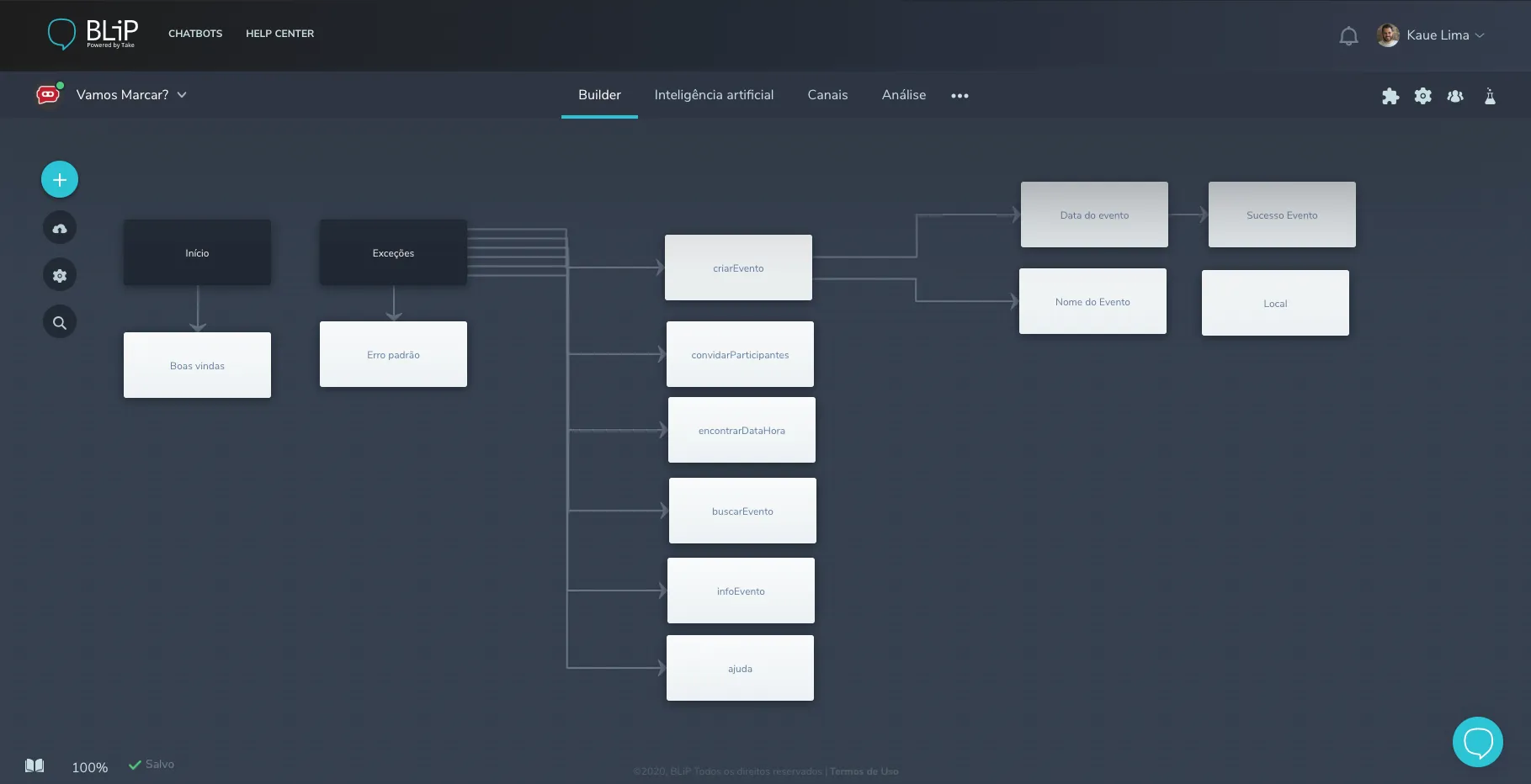
Intents and entities as the design material. With no large language model to lean on, the interface is defined by what the system is prepared to recognise. I wrote it the way you write user stories: an intent for each thing someone wants to do, plus the range of phrasings a real person might use to ask for it. Seven intents were implemented: create an event, find events, invite participants, find the best date and time, get event details, manage an event, and help. Five entities carried the content: name, date, time, place and participants.
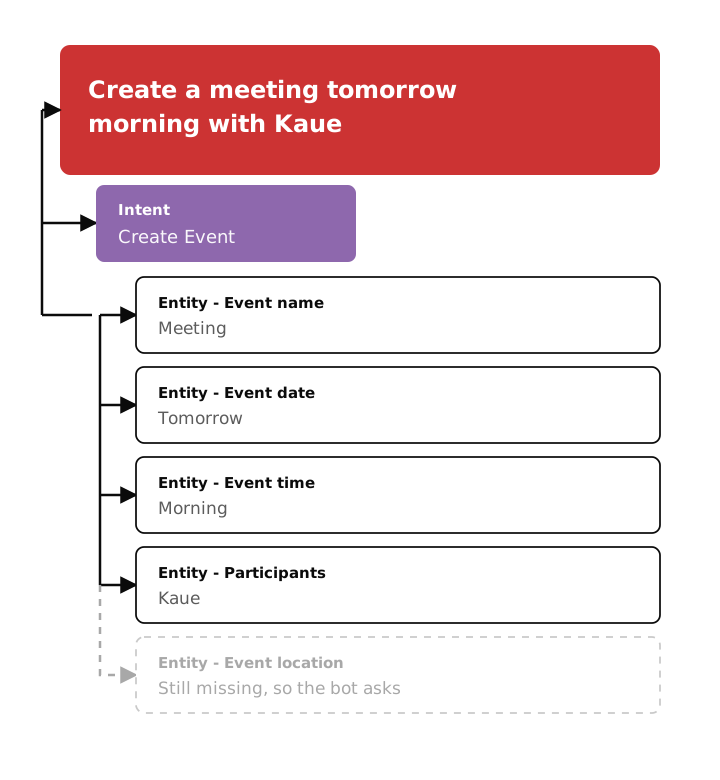
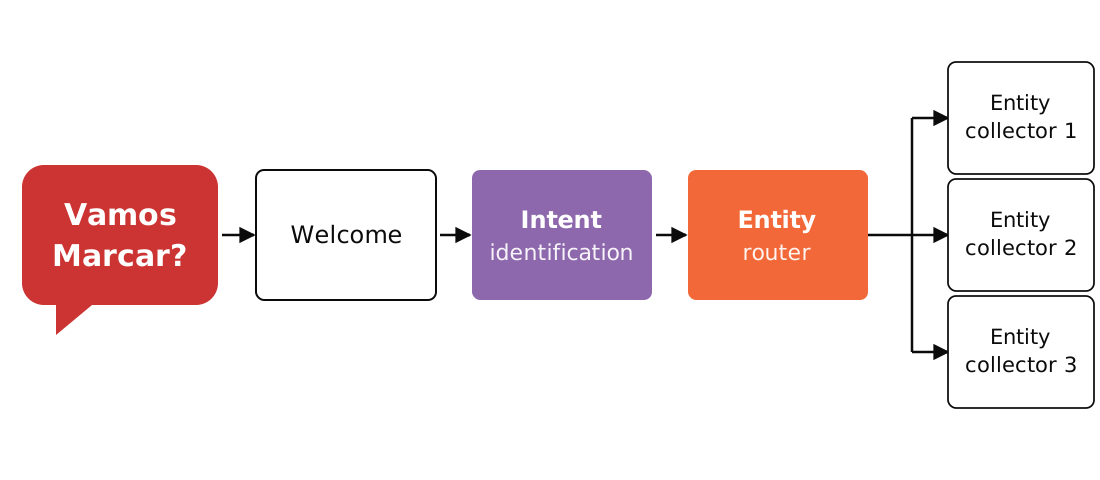
The flow collects only what is missing. A message goes to the NLP provider, which returns ranked intents with confidence scores. High confidence routes to an entity router built for that intent; low confidence falls to a recovery flow. The router reads what the sentence already contained and asks only for the rest. “Create event” triggers five questions. “Create a meeting tomorrow morning with Kaue” triggers one, because only the location is still unknown. That is the whole conversational argument in one detail: the product should never ask twice for something already said.
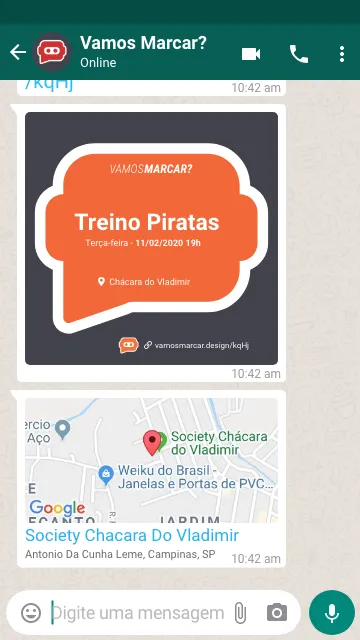
Personality where the brand could not live. The touchpoints sit inside other companies’ interfaces, so there was very little surface to design. The identity had to survive as a small icon: a speech bubble crossed with a robot, all corners rounded to keep it friendly rather than mechanical. Invitations and reminders go out as generated images carrying the event name, date, time and location, which gave the brand a presence in the thread and made events easy to forward.
Building it
The prototype ran on BLiP for the conversation flows and IBM Watson Assistant for natural language processing, connected so that intents and entities registered once were served to every channel. It shipped on Telegram, Facebook Messenger and a web widget. WhatsApp, the channel the research pointed at, was the one the free tier would not allow.
It was deliberately a prototype rather than a product. With no database or backend behind it, entities that should have been dynamic were registered as fixed lists, and the three intents that depended on real state, notifying participants, asking guests to invite others, and setting reminders, were specified but left unbuilt. The point was to test whether the conversation worked, not to run real events.
Outcome
Fourteen people used the prototype in the test window, exchanging around 880 messages. Their phrasings went straight back into the model as new training examples, and by the end it was recognising real sentences with high confidence: “vamos marcar um almoço com Aline no sábado de manhã” resolved to the create-event intent with all four entities pulled out of it correctly.
The tests also mapped the edges. Negation was the clearest failure. The model read intent well and rejection badly, so a user saying no to a suggestion could still be routed as if they had agreed. Alongside a real backend, that was the top item on the list of what would need to change next.
What the project proved to me was the part that has aged well. Language as an interface is a design problem, not a model problem. Deciding what the system should understand, what it should ask for, and what it should do when it has guessed wrong is work that had to be done by hand in 2020 and still has to be done now. The tooling got dramatically better. The questions did not change.